Russian
The Forklift Selection Dilemma: How to Match Electric, Diesel, and Rough-Terrain Models to Real-World Operating Conditions?
In various material handling scenarios, efficiency losses and cost overruns caused by improper selection of forklifts are "invisible pitfalls" that many companies are prone to step into. Facing the three mainstream types of forklifts on the market - electric forklifts, diesel forklifts and off-road forklifts, the higher the price or the more powerful the better, the key depends on the matching of the operating site, load curve, attendance intensity and full life cycle cost. From the perspective of practical application, the following is a breakdown of the "capability boundaries" and "optimal battlefields" of the three types of aircraft.
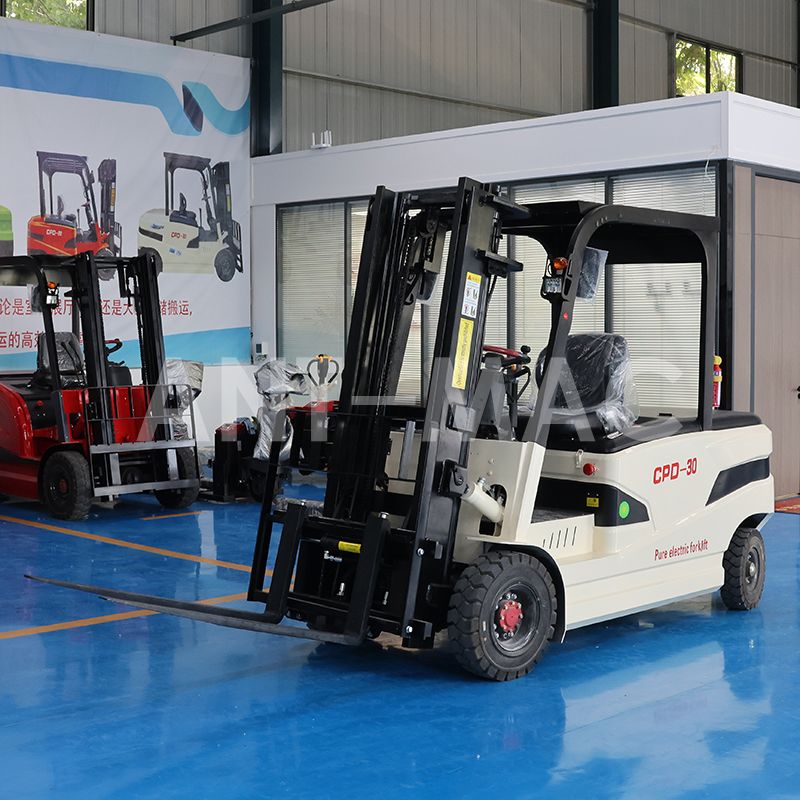
1. Electric forklift: “Indoor workhorse” driven by precision and environmental protection
The core competitiveness of electric forklifts is not "saving money", but controllability and environmental friendliness. Its motor output characteristics determine that the lifting and walking movements are more linear. Especially when fine-tuning stacking in narrow shelf aisles, the operator can get more detailed feedback. At the same time, zero tail gas emissions make it a hard threshold option for regulated industries such as food processing, pharmaceutical warehouses, and cold chain logistics.
Key capability boundaries:
Under the standard battery life configuration (common 60V/70Ah~86Ah battery packs), it can meet intermittent operations within 8 hours of a single shift; if two shifts are required, a backup battery or fast charging station needs to be planned.
The fully loaded gradeability is about 13%~15%, and the minimum ground clearance is about 9.5cm. It is not recommended to operate outdoors on potholed ground or in areas with dense slopes for a long time, otherwise the battery consumption rate will increase sharply and the risk of chassis scratches will increase.
The most suitable image: Indoor warehouses with flat floors, noise control requirements, and medium-to-high cargo turnover frequency.
2. Diesel forklift: "long-distance runner" in open venues
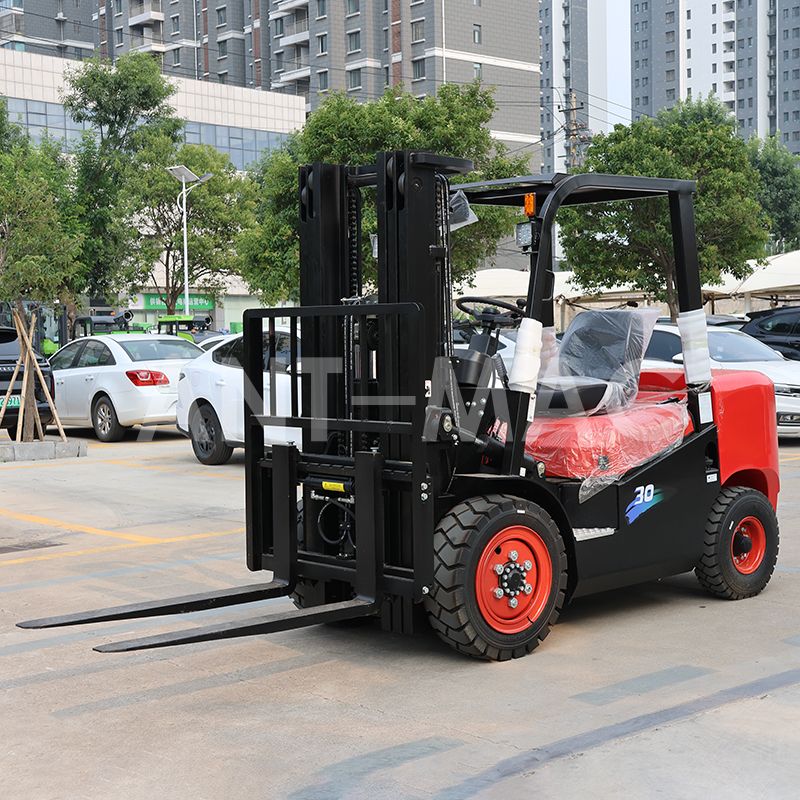
The value of a diesel forklift lies in its energy supply speed and continuous output capability. Refueling takes only a few minutes, and the engine can output a large torque in the low speed range, which makes it easy to perform in bulk cargo loading and unloading scenarios that require frequent starting, acceleration and deceleration. In addition, its pneumatic tires and tall chassis (the minimum ground clearance is generally above 220mm) give it better open-air road adaptability than electric models.
Hidden costs to weigh:
In addition to fuel consumption, regular engine maintenance (oil, filter, coolant) and transmission maintenance constitute ongoing operating expenses.
On slopes or soft ground, the two-wheel drive or regular four-wheel drive version may slip; if the construction site is muddy, extra attention needs to be paid to the tire pattern and drive axle type.
The most suitable images: Port cargo yards, building materials yards, outdoor turnover areas of manufacturing companies, etc. on hard or slightly uneven ground with long daily continuous operations.
3. Off-road forklift: special equipment for "roadless conditions"
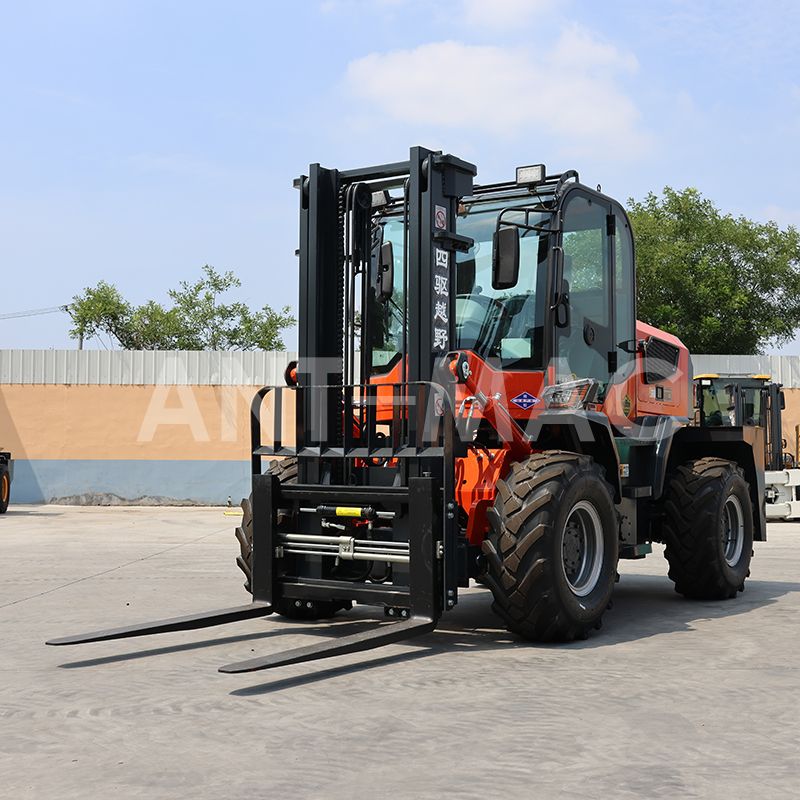
Off-road forklifts are not an "enhanced version" of ordinary forklifts, but are redesigned around ground adhesion, chassis torsion resistance and hydraulic system safety. Its typical features include: four-wheel drive, large-diameter deep-pattern engineering tires, thickened frame longitudinal beams, and a mast inclination angle specially designed for steep slopes (common forward inclination of 10°/rearward inclination of 6°~8°), ensuring that the fork can maintain horizontal forking on slopes.
Hard indicators that are easily overlooked:
Ground clearance is the core threshold - the value of 250mm~400mm determines whether it can clear rocks, roots or ruts. If there are obstacles exceeding 20cm on the construction site, ordinary forklifts will inevitably support the bottom, but off-road vehicles can pass normally.
The explosion-proof design of the hydraulic system is not a marketing rhetoric: when the oil pipe accidentally ruptures on a slope or uneven ground, the ordinary forklift mast will fall rapidly; the off-road model uses a built-in throttle valve or explosion-proof valve to control the descent speed within a safe range, which is crucial to the operator's personal safety.
Its dead weight usually exceeds 4 tons, and some models reach more than 6 tons. There are additional requirements for the load-bearing capacity of trailers or pallets when transported.
The most suitable images: Mine stripping surfaces, farmland straw loading and unloading, forestry log transfer, building foundation construction, post-disaster emergency clearing and other scenes without hardened roads and large slope changes.
4. “Reverse verification method” for selection decision-making
Instead of listing the parameters forward, it is better to ask three questions in reverse:
What is the worst ground condition?
——If more than 10% of the factory area is made of soil or gravel, electric forklifts will be given priority; if there are long slopes exceeding 15° or water-filled potholes, off-road forklifts are the only reasonable option.
Does the average duration of a single continuous operation exceed 4 hours?
——If it exceeds, it is necessary to calculate the time cost of charging the electric forklift midway and the purchase fee of spare batteries, and compare the difference in fuel consumption of diesel or off-road models.
How is the maintenance response capability?
——Electric forklifts have fewer maintenance items but rely on circuit diagnostic equipment; the mechanical structures of diesel and off-road models are more versatile, making maintenance more convenient in remote areas.
5. Mixed configuration: another underestimated idea
For comprehensive sites with complex working conditions (for example, there are both hardened platforms, open-air storage yards, and temporary construction areas), there is no need to insist on "one vehicle fits all". One off-road forklift is responsible for outdoor heavy loads and complex terrain, and one or two electric forklifts are used for indoor precision operations. It is often better to balance investment and efficiency than purchasing a single high-end model. The key is to divide functions by operating area, rather than "buy big and get everything" according to the upper limit of the budget.
Conclusion
Forklift selection is essentially a ranking of operating constraints: first meet the bottom line of safety and passability, then optimize efficiency indicators, and finally calculate long-term costs. It is recommended that enterprises measure the site slope, minimum aisle width and daily load peak height on site, and compare the data with the key parameters of the three types of aircraft (ground clearance, climbing angle, wheelbase, dead weight) one by one to avoid falling into the misunderstanding of "the higher the parameter, the better". The right forklift is one that allows the operator to ignore its presence.
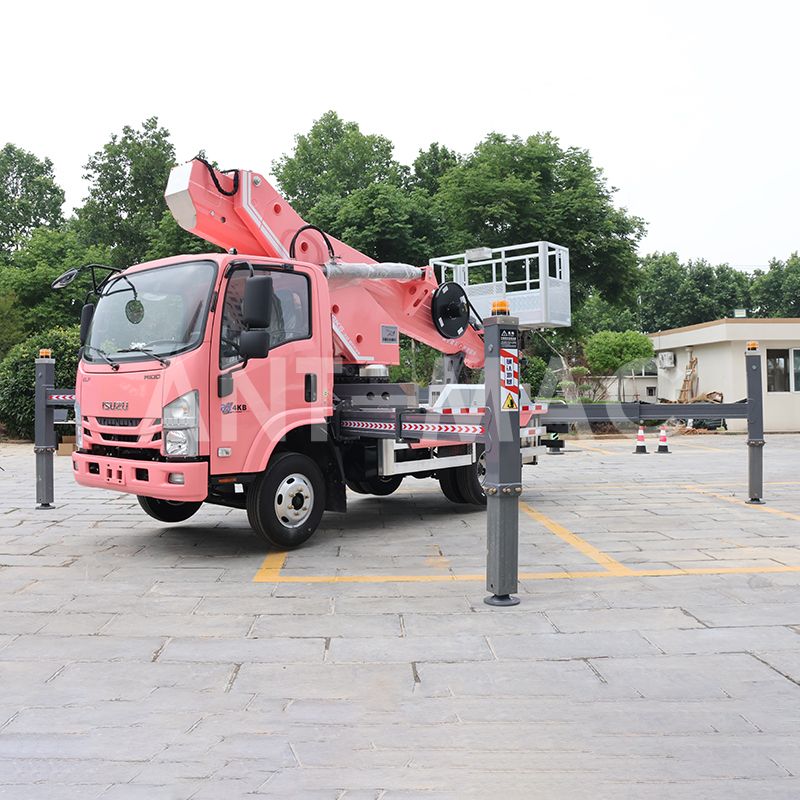 Antmac 40m Truck Mounted Aeria
 Ant-Mac Aerial Work Platforms
 Global Aerial Work Platform Ma
 Malaysian Customer Purchases A