Russian
Comprehensive Upgrade of Safety Devices for High-Altitude Work Platforms Analysis
In mature markets like Europe and North America, there is an unwritten rule when purchasing aerial work platforms: the integrity and reliability of safety systems take precedence over maximum working height or platform load capacity. Market entry requirements—such as CE certification, ANSI standards, and CSA specifications—essentially address the same fundamental question: Can this equipment safeguard the operator's life in extreme situations?
By integrating the latest product technologies with industry safety standards, this article provides a systematic overview of the core safety systems found in truck-mounted aerial work platforms.
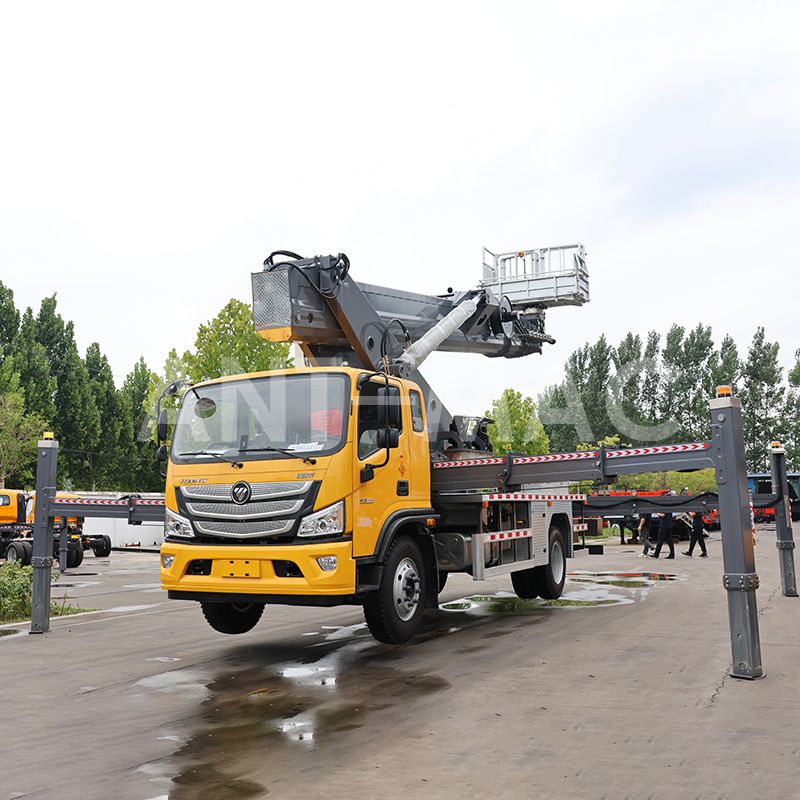
I. Upper/Lower Unit Interlock and Outrigger Interlock: Preventing Fatal Errors Like "Operating Before Deployment"
Activating boom movements before outriggers are fully deployed is one of the most critical safety hazards associated with aerial work platforms. Our entire model range comes standard with an automatic interlock system between the upper unit (boom assembly) and the lower unit (chassis): boom movements are automatically disabled if the outriggers are not securely deployed; conversely, driving operations are prevented if the boom is not fully stowed.
Additionally, each outrigger is equipped with a dual-acting hydraulic lock to effectively prevent unintended retraction during operation. Even in the event of a ruptured hydraulic line, the outrigger maintains pressure, preventing the vehicle from tipping over due to sudden pressure loss. Some models feature outrigger support force monitoring: if any vertical outrigger loses contact with the ground or loses pressure during operation, the system automatically halts all movements and triggers an alarm. For customers targeting European and North American markets, this dual-layer protection against outrigger lift-off has become a key advantage during the tender evaluation process.
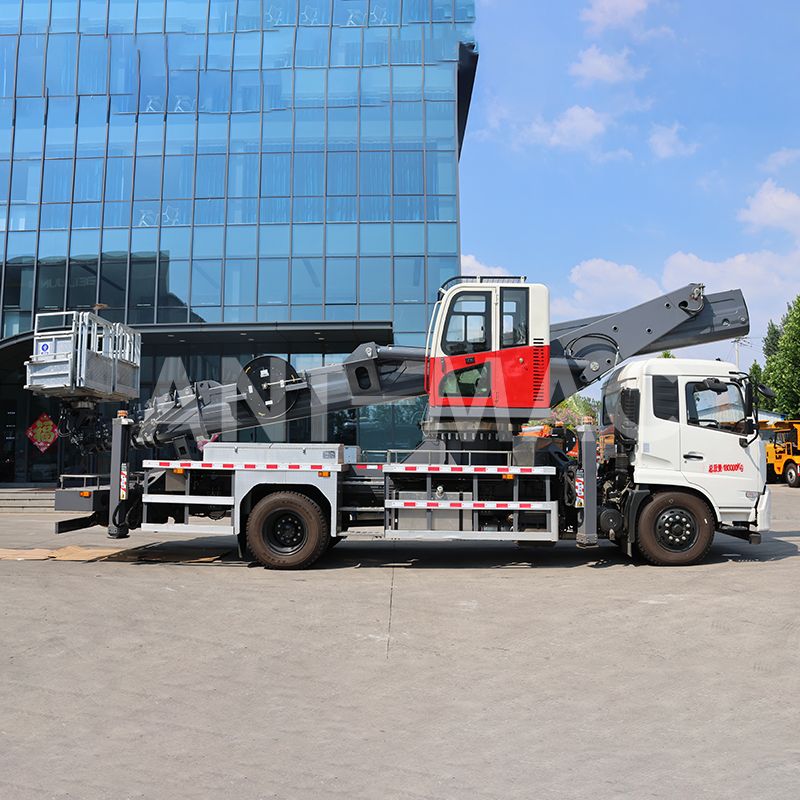
II. Overload Protection and Working Range Limiting: Ensuring Equipment Prevents Operator Error
Platform overloading is a major cause of falls from height and vehicle tip-over accidents. The overload protection system on our models is configured as follows: an audible warning sounds when the load reaches 95% of the rated capacity; when the load hits 105%, upward platform movement and boom extension are automatically disabled, allowing only lowering operations.
Furthermore, the electro-hydraulic proportional control system works in tandem with an automatic working range limiter to dynamically adjust the operating envelope based on the actual platform load. The heavier the load, the more restricted the allowable working range becomes; as the load decreases, the range automatically expands, thereby maximizing operational efficiency without compromising safety. Automatic rotation limiters for the turntable, combined with dual limiters on the jib and articulating boom, further prevent the boom assembly from exceeding safe operating ranges.
III. Emergency Descent and Backup Power Systems—A "Lifeline" During Power or Fuel Loss
One of the most dangerous scenarios involves an operator becoming stranded aloft due to engine failure or a main pump malfunction. Our entire product line comes standard with a dual-mode emergency descent system:
Electric Emergency Pump: Activates when the main pump fails, using backup power to drive the hydraulic system and safely retract the boom and outriggers.
Manual Emergency Pump: Allows the operator to lower the work platform to the ground manually, even in the event of a total electrical system failure.
Selected models also feature an emergency descent knob at the base of the main lift cylinder; this allows for the mechanical, gradual lowering of the boom should the engine fail to start and backup power be depleted.
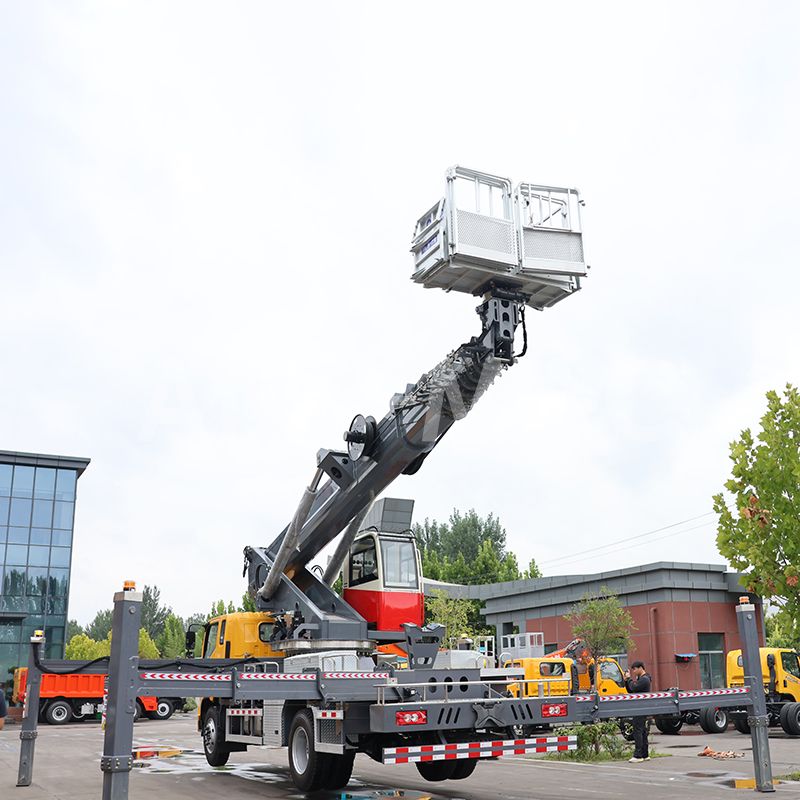
IV. Dual-Station Operation and Emergency Stop—Multiple Controls Ensuring "Immediate Intervention"
A dual-station control system—located at both the turntable and the work platform—is an industry standard. These control sets are switchable and interlocked, facilitating coordinated operations between ground and aerial personnel. The turntable operator can override platform controls to retract the boom in an emergency.
Emergency stop buttons are located on the upper and lower control consoles as well as the wireless remote control; pressing one cuts power to all motion circuits, serving as the final safeguard against unexpected incidents.
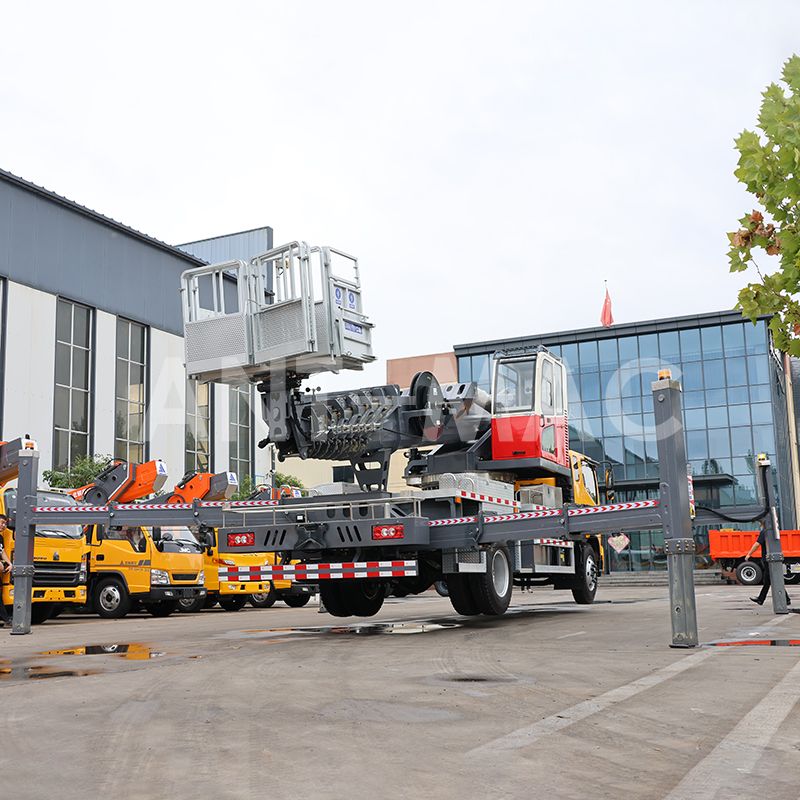
V. High-Precision Leveling and Anti-Slip Platform—Safety Logic Behind Operational Comfort
A static hydraulic automatic leveling system (or electro-hydraulic leveling system) ensures the work platform remains level throughout the boom's luffing process, preventing personnel from slipping or tools from falling due to platform tilting. The platform floor features either double-layer 25mm anti-slip patterned aluminum or high-strength anti-slip steel plating; combined with a platform width exceeding 1800mm, this provides a stable footing for the operator. VI. International Certification: "External Endorsement" of the Safety Baseline
Aerial work platforms exported to Europe must obtain CE-MD (Machinery Directive) certification (classified as Annex IV hazardous machinery, requiring certification by an EU Notified Body). Applicable standards include EN 280 (machine safety), EN ISO 12100 (risk assessment), EN 60204-1 (electrical safety), and EN ISO 13849 (functional safety). For the North American market, compliance with ANSI/SAIA A92.20 (USA) and CAN/CSA B354.6 (Canada) standards is required. Additionally, ISO 9001 (quality management) and ISO 14000 (environmental management) certifications serve as key criteria for international clients evaluating supplier qualifications.
Our products have successfully obtained ISO 9001, ISO 14000, and EU CE certifications. We hold over 20 technical patents covering core technologies such as high-strength octagonal booms, dual-cylinder luffing systems, and CBR intelligent limit controllers.
Selection Recommendations
For export-oriented procurement projects, we recommend designating the following three safety features as mandatory requirements rather than "optional extras":
Upper/lower chassis interlock + outrigger ground-contact detection — the first line of defense against tipping over
Overload protection + automatic outreach limiting — minimizing risks associated with operational errors
Dual-mode emergency descent + emergency stop — ensuring a clear escape route during extreme situations
After all, the true value of an aerial work platform is not defined by the maximum height it can reach, but by the height at which it allows the operator to work with peace of mind.
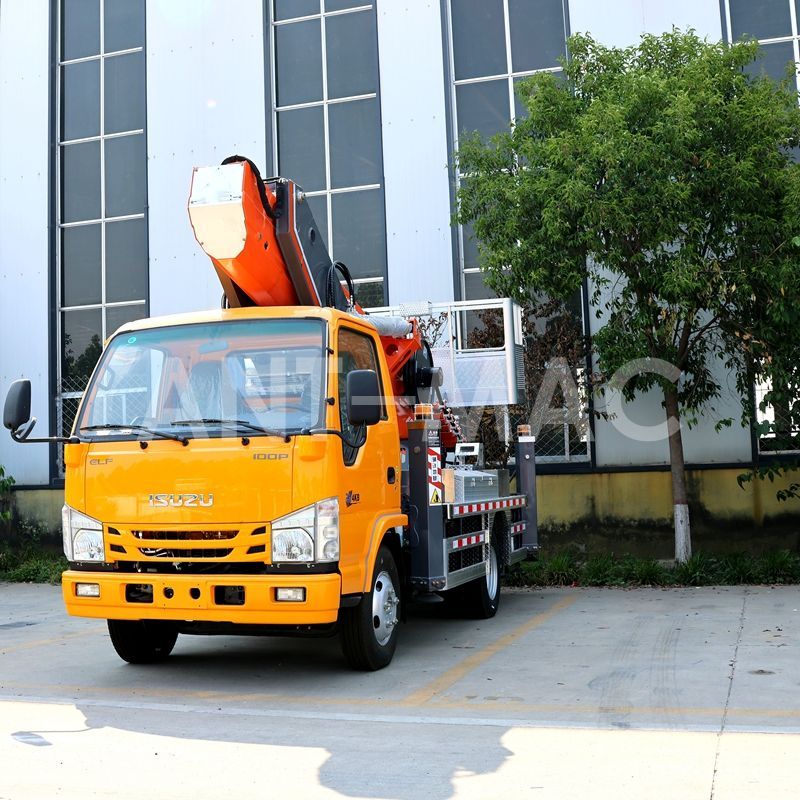 Ant Aerial Work Platforms Push
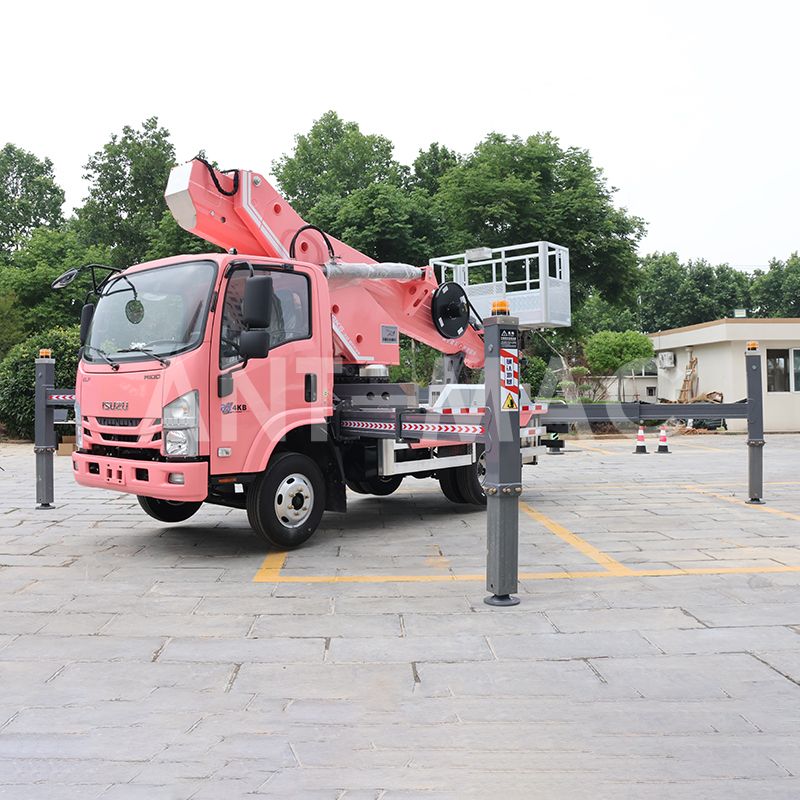 Antmac 40m Truck Mounted Aeria
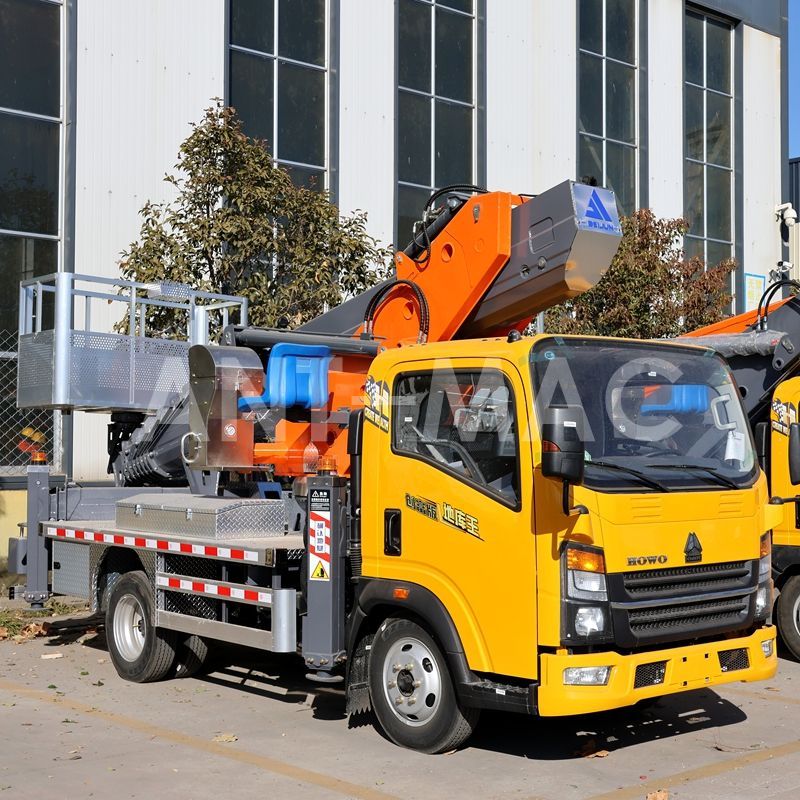 Ant-Mac Aerial Work Platforms
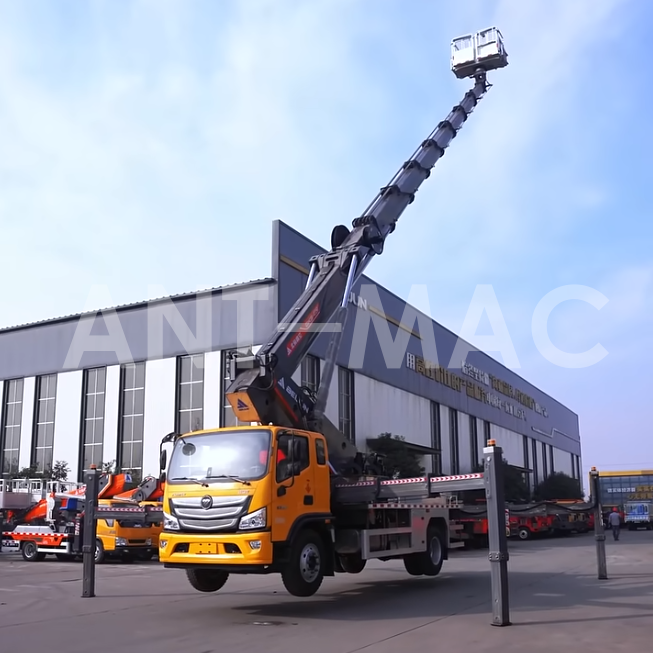 Global Aerial Work Platform Ma